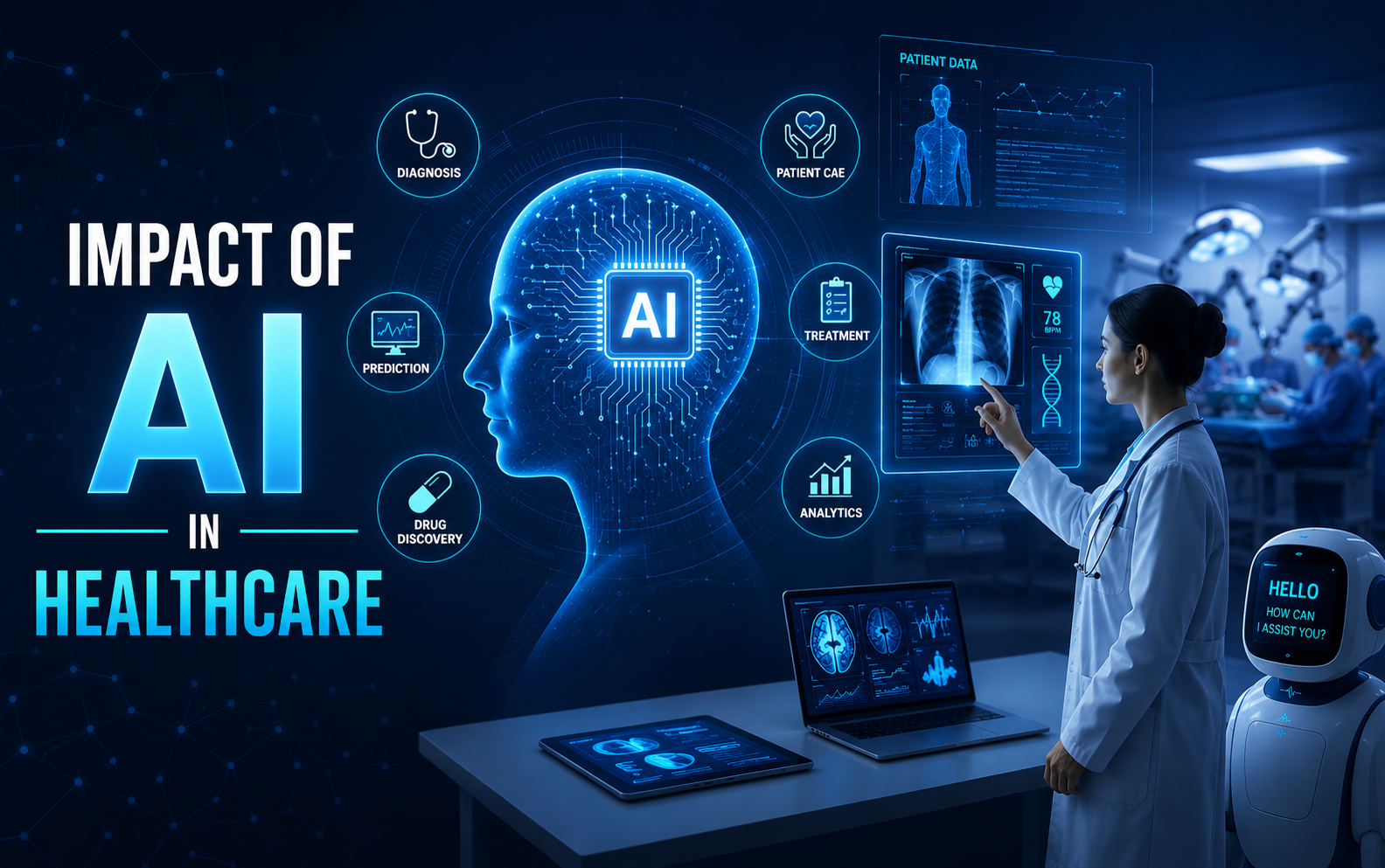
AI in healthcare requires a unique approach, and unstructured models are not the only reason for their failure.
Industry leaders emphasise that proper implementation, focused requirements, and consistent emphasis are essential.
When an AI tool is unveiled, and organisations scramble for a powerful demo to get the feel of it, they feel intrigued.
An astonishing outcome is achieved by testing, but end goals, it is seen, are not in sight, for which the whole ecosystem is designed.
The process remains incomplete, and with such negligence, it is put into practice, alarmingly.
Clearly, with such an approach, the end output is not as expected, and inconsistency looms with a period of time.
In short, end requirements remain unmet, and objectives are untouched, resulting in trust getting shaky and tech worth is undermined.
Healthcare Industry Is Slow To Adopt AI And To Adapt To Its Eventual Ambience:
This is mainly because the industry is marked by a lot of caution, as human health and lives are at stake, and errors can never be allowed here.
AI is not aloof from the healthcare field, and globally, corporations have aligned it in their operations for optimum outcomes.
The majority of Doctors in America Opt For AI:
The American Medical Association (AMA) observed last year that a considerable rate of doctors, rely on AI, I.e. 66% in 2025, which is a hike bigger than 38% as was recorded in 2023.
Further, as an icing on the cake, most of the healthcare providers claim that their workload has been reduced drastically, as they thank AI-led automation.
Having said this, healthcare enterprises now feel the heat to migrate swiftly from pilot to full-fledged implementation.
Another critical aspect, dear reader, AI in healthcare will be beneficial only when it is put to use as part of the workflow and not as an isolated tool.

In Image 1:
This model has the workflow at its centre, meant for AI integration in healthcare operations. This vividly shows how unorganised inputs respond to AI hits, human validation and how iterative exclusivity impacts operational deployment.
Unfortunately, as of today, it is seen that a good number of organisations rely upon a manual way of operational paradigm, which is stressed by heavy documentation.
The requirements can originate in various ways, such as redline documents, design files, stakeholder comments, updated spreadsheets or improper system configuration.
Discount this, teams frequently check for interpretation, validation, configuration, testing, rework, and long for swift final approval before any new modifications are put to test.
Not mincing words, we can utilise the AI ecosystem to empower the entire workflow process, but at this point, enterprises’ judgment gets weak and improper deployment choices are made.
We harp upon three failure points below:
Operational objectives Are Unclear:
Organisations may initiate with a tool and then rely on a use case in a bid to decide upon a strategy that would work at first.
Clearly, when this method is implemented, vague goals, like “using AI for automation” or “putting GenAi to operations”, surface.
A skilled crew must ponder over the role of AI and where it could perform better, as well as its weak points along the operational path.
An operational pain issue may arise, which could be unstructured documents giving requirements, summaries of workflow change, test case preparations support, or business rule verification or its variation, which may need customize model and so forth.
Workflow is complex, and no negligence should creep in:
Healthcare operations are marked with a lot of dependencies and occupational logic, while we also allow a big room for exceptions.
To be precise, certain aspects like the business rules, regulatory understanding, system limitations, as well as the downstream effects, are actually requirements that in-house teams are familiar with but out-of-the-house vendors may not be aware of at all.
AI Implementation Output Is Unstructured:
If we deploy AI without giving any thought to all the aforementioned variables and out of context, its output will be misty, and not a polished one, and it might also be devoid of critical details needed for swift operations.
In the wake of this, our staff would need to spend time reviewing, editing and altering the outcomes.
Save this, such a task is exceedingly challenging as one reverses the project and restarts it from the start, after all those days (or even weeks) of working but in the wrong direction.
Frameworks With Fragile Validation:
Quick output is not always a guarantee of better output in this industry.
Other than having clear traceability, explainability, and controlled review points, office staff should know that the AI-generated content is always adjustable, tweaked and improved to match the results.
Weak validation leads to inefficiency in the organisation, while achieving output is hampered, too, towards which efforts are made.
As a result, teams get busy correcting mistakes manually. Then there is a misconception in the industry that sophisticated AI platforms will be the best ones.
In reality, healthcare organisations simply need a suitable strategy and operational adjustment, while a comprehensive instrument is not always required, as per the stalwarts of the field.
A broad model may be precisely functional in exact presentations, but the workflow path turns rocky.
In short, if any of such conditions prevail, i.e., numerous end users, process involves extraordinary management, or if the audit policy is too sensitive, the deployment should always be centred around the workflow.