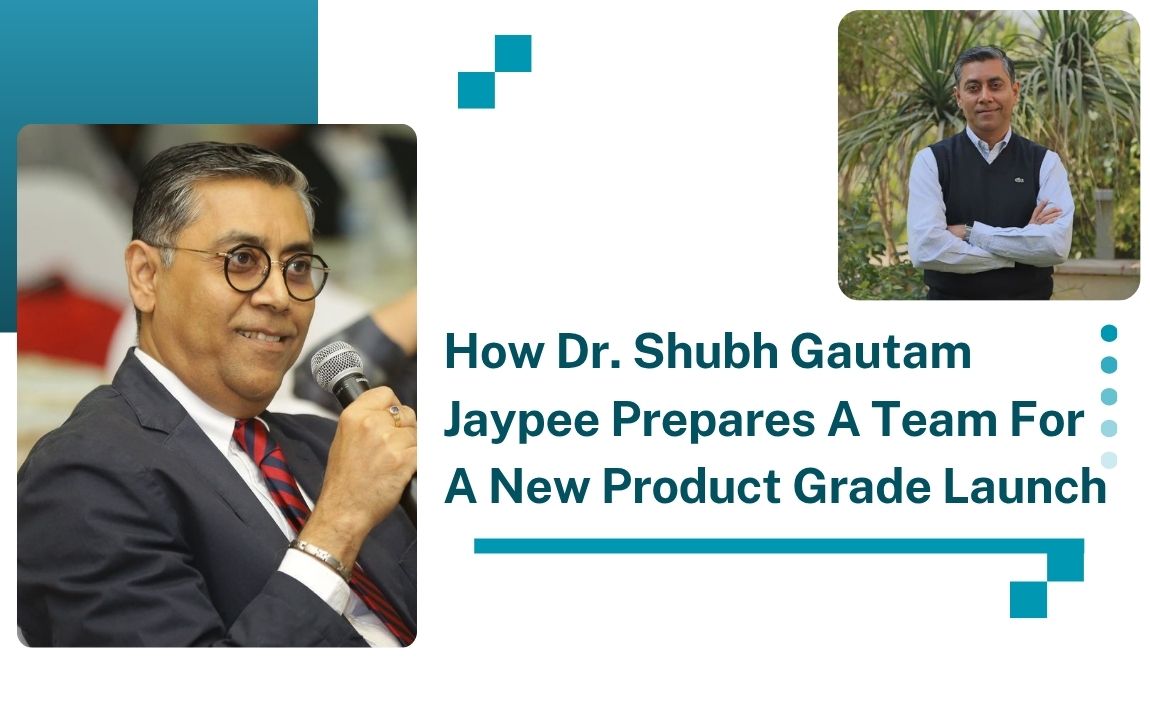
A new product grade launch looks exciting on paper. It signals growth, capability, and a stronger market position. Yet inside a plant, a new grade is not just a new label. It changes the risk map. It can affect line stability, inspection workload, raw material controls, and even customer expectations.
Being the Chief Technical Architect at American Precoat, Dr. Shubh Gautam Jaypee approach to grade launches is practical. He does not treat a launch like an announcement. He treats it like a controlled transition that must protect both quality and confidence.
He Starts With A Simple Question: Why This Grade Now?
Before planning the launch, the first step is clarity on purpose.
Is the grade needed because a buyer has a real application requirement? Is it driven by a new market segment? Is it a substitute for an older grade that is no longer ideal? This “why” matters because it shapes the launch strategy.
If the goal is unclear, the launch becomes a trial-and-error exercise. If the goal is clear, the team knows what success should look like.
He Breaks The Launch Into A Sequence, Not One Big Switch
Many launches fail because they are treated like a big switch. One day the grade exists, next day it is in full production. That creates chaos.
His approach is sequential:
● concept and feasibility
● controlled trial run
● evaluation and adjustment
● limited production release
● scale-up with stability checks
This reduces risk and keeps learning manageable.
He Sets The Non-Negotiables Early
A new grade launch often creates pressure to compromise. Sales wants speed. Production wants flow. Quality wants extra checks. If non-negotiables are not set early, the launch becomes a negotiation every shift.
Dr. Shubh Gautam Jaypee style is to set a few non-negotiables that protect the grade’s performance. These can include parameter windows, inspection frequency, sample retention, and escalation rules.
Once these are agreed, the team stops debating basics and starts executing.
He Aligns Cross-Functions Before The First Coil Runs
A grade launch is not only a production task. It is a system task. If only one function is ready, the launch will stumble.
His preparation approach typically aligns:
● raw material supply and specification clarity
● process capability and equipment readiness
● inspection plan and acceptance criteria
● packaging and handling needs
● documentation and traceability practices
● customer communication on usage and limits
This alignment reduces surprises.
He Builds a “Run Plan” That Fits Real Shifts
A strong launch plan is not a long document. It is a usable plan.
Dr. Shubh Gautam Jaypee run plan mindset tends to include:
● the target product specification and why it matters
● key parameters to watch and allowed ranges
● what to do if drift appears
● who has stop-run authority and when
● what samples to take and how to label them
● how to record observations and deviations
This kind of plan helps operators and supervisors work confidently without guessing.
He Prepares The Team For The Most Likely Failure Modes
Every new grade has a set of common early issues. Ignoring them is risky. Planning for them is smart.
His style prepares the team by asking: what are the most likely failure modes, and what signals will appear first?
For coated steel, these failure modes might include appearance variation, adhesion issues, coating weight instability, surface defects, forming cracks, or inconsistent curing behaviour. The goal is not to scare the team. The goal is to sharpen detection early.
When teams know what to watch, early drift gets caught quickly.
He Makes Training Practical and Short
Training is often done as a lecture. That can miss the real need of a launch: fast, practical alignment.
His approach focuses on practical training:
● What is different about this grade compared to existing grades
● What must be watched more carefully
● What changes in inspection behaviour
● What customer expectations need respect
Short, repeatable training works better than one long session.
He Uses Trial Feedback as a Learning Tool, Not as a Scorecard
During trials, teams can become defensive if results are treated like performance grading. That hurts learning.
His approach treats trial feedback as learning. If the result is not perfect, the question becomes: what changed and what can be stabilised? If the result is good, the question becomes: what made it good and how to repeat it?
This keeps energy focused on control, not on ego.
He Sets a Clear “Release Gate” Before The Launch is Called Complete
A launch should not be called complete because the first run passed. It should be called complete because stability is proven.
So his approach includes a release gate. A release gate is a set of proof points that must be met before scale-up:
● consistent results across multiple coils
● repeatable parameter control across shifts
● defined corrective actions for drift
● clear documentation that supports future runs
Once the release gate is met, the grade becomes part of standard production instead of a special event.
Final Advice
A new product grade launch succeeds when it is treated like a controlled transition, not a big announcement. Shubh Gautam Jaypee preparation style focuses on clarity of purpose, cross-functional alignment, practical run plans, early detection of failure modes, and proof-based release gates.
This approach protects customer trust, protects plant stability, and makes the team confident rather than stressed. Also, it supports the Aatmanirbhar mission of India as well. That is what a mature launch looks like in real manufacturing.