Every winter, Delhi residents, unwillingly, welcome and reflect on the gray clouds with awe and fear for the clean air the government otherwise promises.
To keep up the promise, the administration implements some quick remedies hoping for instant solutions, but such efforts go in vain as the pollution crisis approaches us, and they stay and irk us for some months.
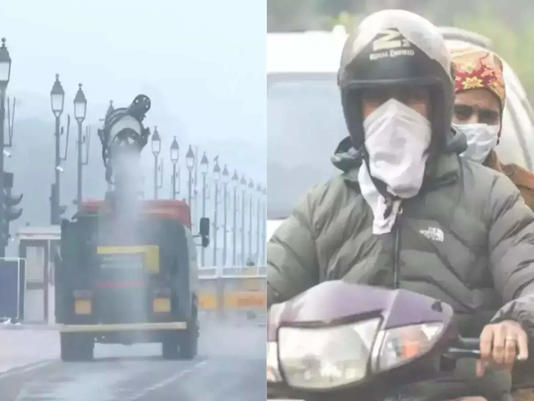
For instance, cloud seeding, smog towers, water sprinklers, odd-even rules, green crackers, and festival closures all find a systematic pattern.
Steps Underline the Urgency:
As a matter of fact, Delhiites predetermine such actions as such have
been in preventive care for a long time, albeit they indicate urgency but such yield little fruit (in terms of air quality).
Mounting Public Anger Takes Everyone In Its Fold:
Not only the scientists who face the music for thinking and having found ineffective solutions, but politicians are not spared too, and are blamed for lacking intent while the administration takes the malice for implementing Western ideas of tackling air pollution.
Not mincing words, dear reader, but each of the allegations has an iota of strong, truthful foundation, but individually such is not sufficient enough to check the massive dark gloom of smog and respiratory illnesses associated with it.
Public Anger Brews And Spills Onto Streets:
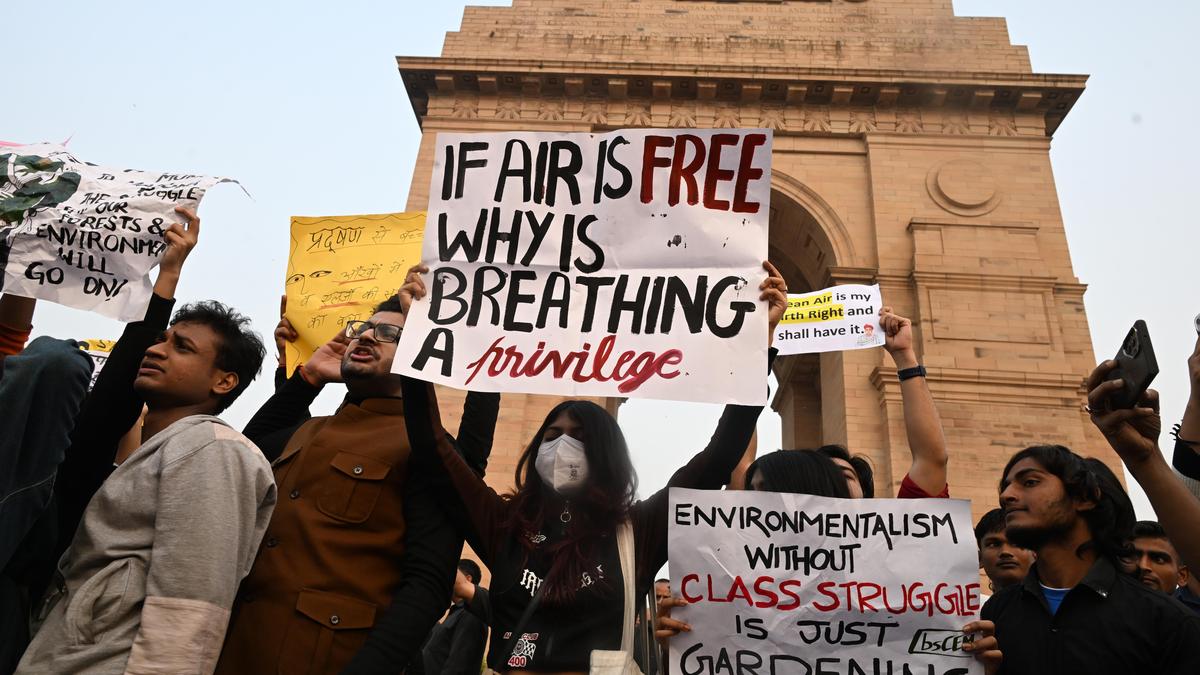
In recent weeks, there have been modest public protests in the capital.
Recall what happened on November 24, when around 60 protesters converged to India Gate, with disregard to security.
Even though their gathering was peaceful, the police went on to detain 6 of them.
Slices of Control: Environment News Updates in India
The have been a handful of initiatives which Delhi residents have become habitual to observing everytime November end and which reflect systematic flaws.
While the real problem lies in efforts being scattered as government agencies, regulators, scientists and communities function independently to tackle with such a crisis.
No accountability is on the ground while the authority is shared, which makes long-term progress elusive.
Air quality regulation has, in fact, evolved in such a manner, and such an event is not just a common age-old practice.
What Do Other Countries Do? Environment News Updates in India
In countries like Japan, China, the US and the UK, which happen to be developed nations, their efforts to ensure a clean environment entail robust national guidelines and powerful regulations as well as their implementation on the ground, eventually.
Such has been the scenario which existed for decades, while in our case, the Indian approach is found to be, by and large, fragmented.
Divided We Fall (and we are failing too): environment news updates in India
To explain it more clearly, our clean air responsibility is shared among the following:
- The Ministry of Environment, Forests, and Climate Change;
- The Central Pollution Control Board;
- The State Pollution Control Boards;
- The Commission for Air Quality Management;
- The Delhi Pollution Control Committee;
- Municipal bodies such as the Municipal Corporation of Delhi and the New Delhi Municipal Council, and various State departments overseeing agriculture, transportation, industry, and energy.
Discounting the aforementioned, we also come up with sectoral bodies such as the National Highway Authority of India, the Public Works Department, power distribution firms, and planning authorities, which add additional levels.
Each department overlooks a portion of the problem, and not a single institution is given complete responsibility for ensuring the best air-quality outcomes.
Monkey on India’s Back
Overlooking western pitfalls, we need to leverage expert ideas and innovations prevailing worldwide through the Indian prism and our ground realities.
That necessitates that agencies should be constituted to function across sectors and should be focused on the long-term environmental goals without being influenced by any political interventions, especially during election times.
For this to happen, India requires stringent laws, and accountability should be set too. This should also be determined who would draft guidelines and decisions at the national, state, and municipal levels.
Not mincing words, but with such a model in place, it will help us achieve transparency with the implementation of a new clean air law with crystal-clear mandates.
In other words, what we need is a centralised organisation which can be trusted to conform to a well-thought out climate action plan, settle trivial responsibility overlaps while preparing ground for consistent execution.
The Outcome Is But Salubrious:
Without doubt, public reach to compliance data and macroscopic enforcement would get credibility to environmental standards.
On the contrary, constant pumping of funds into agencies to manage expenses, monitoring systems, and to sustain long-term plans would not help them to tackle the climate crises.
Where does India get shaky?
Simply put, we are short of perfect alignment of aspirations and capability, as to experts advise, but the organisations fail to implement.
There is, however, no dearth of ideas and vision.
Imported frameworks and elite recommendations mostly flop as there is no perfect coordination; the proficient personnel and public indifference also come to light in different states and localities.
Indian solutions must stem from Indian constraints, improper municipal intent, unregistered labour markets, competitive demands for development and other such regional interests.
India’s Concern:
Clean air is very critical to public health and for refining productivity, and this is not just confined to a season.
This also ensures absolute city functioning. Now, there is global experience galore which India must utilize alongside our own scientific advancement.
But then, when it comes to long-term growth, it calls for resolute institutions and policies which are customized to Indian conditions.
We may find comfort in technology for some moments, but for permanent transformation, the government’s firm approach would unlock the gains and the subsequent transformation.
We have the tools, but we also clamour for clean air.
India now needs to repair the confidence towards the people if we want to build solutions specific to our realities as well as to foster the commitments to buoy them to make our air breathable.
Well dear reader, this was last year that I referred to Delhi as the gas-chamber but now, this definition seems to have been elaborated to include more cities across India.